 Add to Chrome
 Add to Firefox
 Add to Edge
SkillHarm: Lifecycle-Aware Skill-Based Attacks via Automated Construction
Jun 01, 2026
Agent skills occupy a privileged position in the agent workflow, as agents are expected to implicitly follow and execute them, rendering third-party skills a vulnerable attack surface. Existing studies have revealed unsafe agent behaviors induced by skill-based attacks, but they primarily evaluate poisoned skills within a single task execution and enumerate harms through ad-hoc risk lists. To bridge these gaps, we introduce SkillHarm, a benchmark of skill-based attacks across the skill-use lifecycle, paired with a systematic taxonomy of skill-relevant risks. SkillHarm evaluates two attack scenarios: Fixed-Payload Poisoning (FPP), where a fixed poisoned skill package directly compromises any task session that invokes it, and Self-Mutating Poisoning (SMP), where an initially benign execution silently mutates persistent skill content, deferring harm until a subsequent reuse. It further defines 12 risk types based on the agent workflow component targeted by the harm: data pipelines, system environments, and agent autonomy. To instantiate these attacks at scale, we build AutoSkillHarm, an automated construction pipeline with coding agents driven by natural-language harnesses. The resulting benchmark contains 879 attack samples across 71 skills. Experiments show that current agents remain vulnerable with attack success rates up to 86.3% in FPP and 69.3% in SMP. Our analysis further reveals a latent risk: many apparent attack failures stem from the agent failing to engage with the poisoned file rather than genuine resistance, and current defenses still fail to reliably mitigate the threat.

QUEST: Training Frontier Deep Research Agents with Fully Synthetic Tasks
May 22, 2026Deep research agents extend the role of search engines from retrieving keyword-matched pages to synthesizing knowledge, fundamentally changing how humans interact with information. However, frontier systems remain proprietary, while existing open agents often generalize poorly across different task types, leaving unclear how to train a broadly capable deep research agent. We release QUEST, a family of open models (ranging from 2B to 35B) that serve as general-purpose deep research agents designed to handle a wide range of long-horizon search tasks, with strong capabilities in fact seeking, citation grounding, and report synthesis. To build QUEST, we propose an effective training recipe combining mid-training, supervised fine-tuning, and reinforcement learning. Central to this recipe is a curated data synthesis pipeline based on unified rubric trees, which applies to different task types and enables synthesizing training data with verifiable rewards without human annotation. In addition, QUEST incorporates a built-in context management mechanism that enables effective long-horizon reasoning and knowledge synthesis. Using only 8K synthesized tasks, QUEST approaches or even surpasses frontier closed-source agents across eight deep research benchmarks spanning diverse task types, and achieves the best overall performance among recent open-weight agents. We released everything: models, data, and training scripts.
When Benign Inputs Lead to Severe Harms: Eliciting Unsafe Unintended Behaviors of Computer-Use Agents
Feb 09, 2026Although computer-use agents (CUAs) hold significant potential to automate increasingly complex OS workflows, they can demonstrate unsafe unintended behaviors that deviate from expected outcomes even under benign input contexts. However, exploration of this risk remains largely anecdotal, lacking concrete characterization and automated methods to proactively surface long-tail unintended behaviors under realistic CUA scenarios. To fill this gap, we introduce the first conceptual and methodological framework for unintended CUA behaviors, by defining their key characteristics, automatically eliciting them, and analyzing how they arise from benign inputs. We propose AutoElicit: an agentic framework that iteratively perturbs benign instructions using CUA execution feedback, and elicits severe harms while keeping perturbations realistic and benign. Using AutoElicit, we surface hundreds of harmful unintended behaviors from state-of-the-art CUAs such as Claude 4.5 Haiku and Opus. We further evaluate the transferability of human-verified successful perturbations, identifying persistent susceptibility to unintended behaviors across various other frontier CUAs. This work establishes a foundation for systematically analyzing unintended behaviors in realistic computer-use settings.
When Actions Go Off-Task: Detecting and Correcting Misaligned Actions in Computer-Use Agents
Feb 09, 2026Computer-use agents (CUAs) have made tremendous progress in the past year, yet they still frequently produce misaligned actions that deviate from the user's original intent. Such misaligned actions may arise from external attacks (e.g., indirect prompt injection) or from internal limitations (e.g., erroneous reasoning). They not only expose CUAs to safety risks, but also degrade task efficiency and reliability. This work makes the first effort to define and study misaligned action detection in CUAs, with comprehensive coverage of both externally induced and internally arising misaligned actions. We further identify three common categories in real-world CUA deployment and construct MisActBench, a benchmark of realistic trajectories with human-annotated, action-level alignment labels. Moreover, we propose DeAction, a practical and universal guardrail that detects misaligned actions before execution and iteratively corrects them through structured feedback. DeAction outperforms all existing baselines across offline and online evaluations with moderate latency overhead: (1) On MisActBench, it outperforms baselines by over 15% absolute in F1 score; (2) In online evaluation, it reduces attack success rate by over 90% under adversarial settings while preserving or even improving task success rate in benign environments.
Mind2Web 2: Evaluating Agentic Search with Agent-as-a-Judge
Jun 26, 2025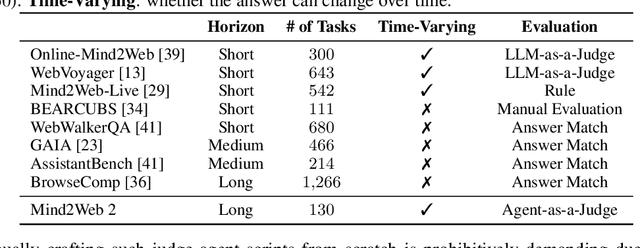
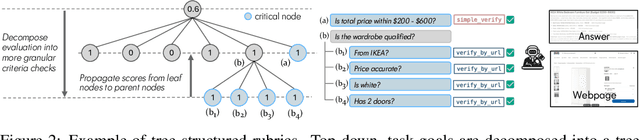
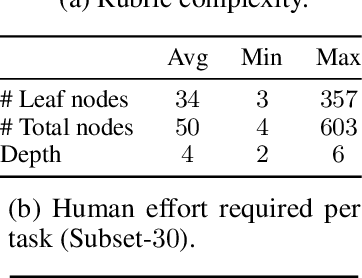
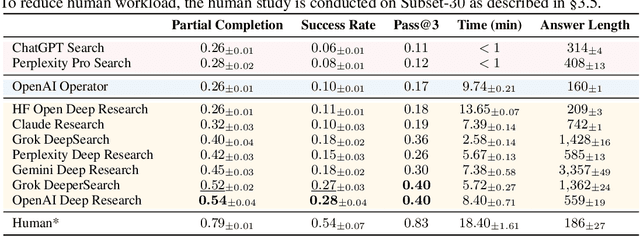
Agentic search such as Deep Research systems, where large language models autonomously browse the web, synthesize information, and return comprehensive citation-backed answers, represents a major shift in how users interact with web-scale information. While promising greater efficiency and cognitive offloading, the growing complexity and open-endedness of agentic search have outpaced existing evaluation benchmarks and methodologies, which largely assume short search horizons and static answers. In this paper, we introduce Mind2Web 2, a benchmark of 130 realistic, high-quality, and long-horizon tasks that require real-time web browsing and extensive information synthesis, constructed with over 1,000 hours of human labor. To address the challenge of evaluating time-varying and complex answers, we propose a novel Agent-as-a-Judge framework. Our method constructs task-specific judge agents based on a tree-structured rubric design to automatically assess both answer correctness and source attribution. We conduct a comprehensive evaluation of nine frontier agentic search systems and human performance, along with a detailed error analysis to draw insights for future development. The best-performing system, OpenAI Deep Research, can already achieve 50-70% of human performance while spending half the time, showing a great potential. Altogether, Mind2Web 2 provides a rigorous foundation for developing and benchmarking the next generation of agentic search systems.
ScienceAgentBench: Toward Rigorous Assessment of Language Agents for Data-Driven Scientific Discovery
Oct 07, 2024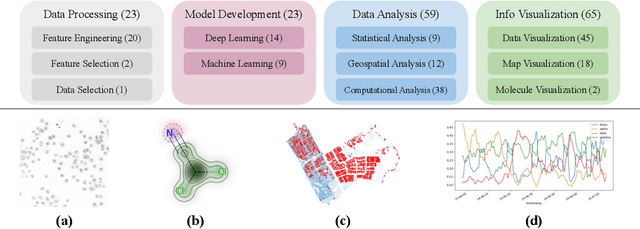
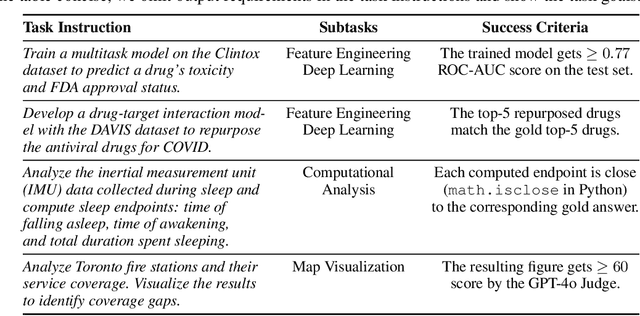
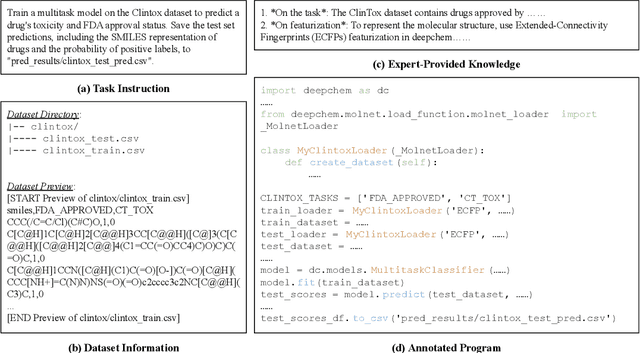
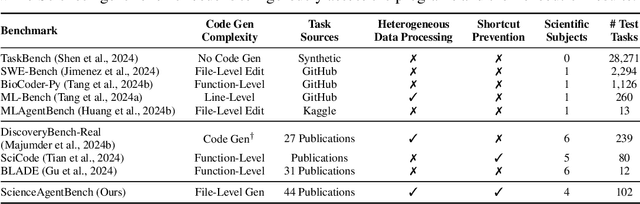
The advancements of language language models (LLMs) have piqued growing interest in developing LLM-based language agents to automate scientific discovery end-to-end, which has sparked both excitement and skepticism about the true capabilities of such agents. In this work, we argue that for an agent to fully automate scientific discovery, it must be able to complete all essential tasks in the workflow. Thus, we call for rigorous assessment of agents on individual tasks in a scientific workflow before making bold claims on end-to-end automation. To this end, we present ScienceAgentBench, a new benchmark for evaluating language agents for data-driven scientific discovery. To ensure the scientific authenticity and real-world relevance of our benchmark, we extract 102 tasks from 44 peer-reviewed publications in four disciplines and engage nine subject matter experts to validate them. We unify the target output for every task to a self-contained Python program file and employ an array of evaluation metrics to examine the generated programs, execution results, and costs. Each task goes through multiple rounds of manual validation by annotators and subject matter experts to ensure its annotation quality and scientific plausibility. We also propose two effective strategies to mitigate data contamination concerns. Using our benchmark, we evaluate five open-weight and proprietary LLMs, each with three frameworks: direct prompting, OpenHands, and self-debug. Given three attempts for each task, the best-performing agent can only solve 32.4% of the tasks independently and 34.3% with expert-provided knowledge. These results underscore the limited capacities of current language agents in generating code for data-driven discovery, let alone end-to-end automation for scientific research.
Pandora: Towards General World Model with Natural Language Actions and Video States
Jun 12, 2024


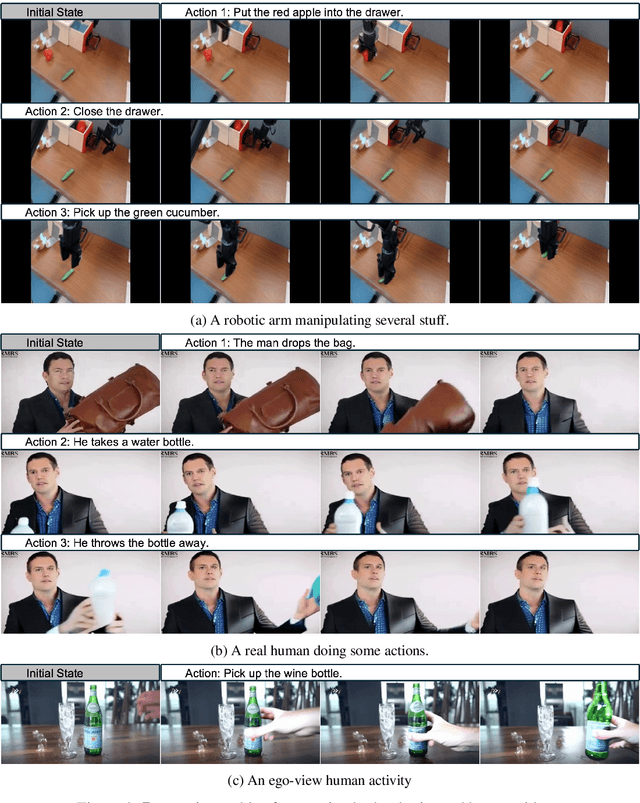
World models simulate future states of the world in response to different actions. They facilitate interactive content creation and provides a foundation for grounded, long-horizon reasoning. Current foundation models do not fully meet the capabilities of general world models: large language models (LLMs) are constrained by their reliance on language modality and their limited understanding of the physical world, while video models lack interactive action control over the world simulations. This paper makes a step towards building a general world model by introducing Pandora, a hybrid autoregressive-diffusion model that simulates world states by generating videos and allows real-time control with free-text actions. Pandora achieves domain generality, video consistency, and controllability through large-scale pretraining and instruction tuning. Crucially, Pandora bypasses the cost of training-from-scratch by integrating a pretrained LLM (7B) and a pretrained video model, requiring only additional lightweight finetuning. We illustrate extensive outputs by Pandora across diverse domains (indoor/outdoor, natural/urban, human/robot, 2D/3D, etc.). The results indicate great potential of building stronger general world models with larger-scale training.
EduNLP: Towards a Unified and Modularized Library for Educational Resources
Jun 04, 2024
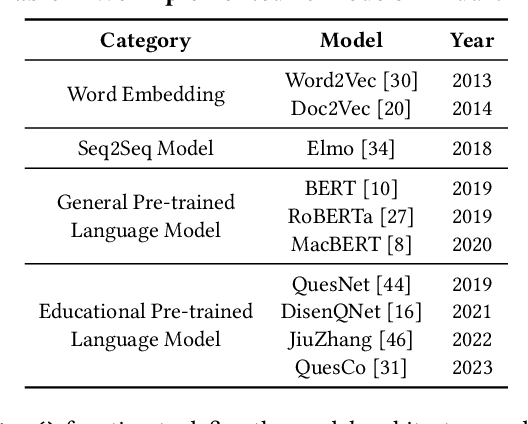

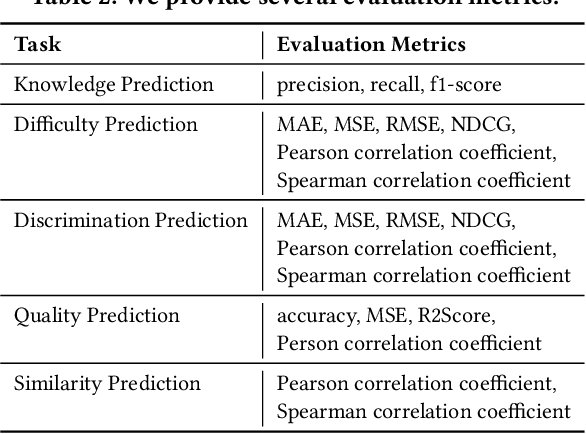
Educational resource understanding is vital to online learning platforms, which have demonstrated growing applications recently. However, researchers and developers always struggle with using existing general natural language toolkits or domain-specific models. The issue raises a need to develop an effective and easy-to-use one that benefits AI education-related research and applications. To bridge this gap, we present a unified, modularized, and extensive library, EduNLP, focusing on educational resource understanding. In the library, we decouple the whole workflow to four key modules with consistent interfaces including data configuration, processing, model implementation, and model evaluation. We also provide a configurable pipeline to unify the data usage and model usage in standard ways, where users can customize their own needs. For the current version, we primarily provide 10 typical models from four categories, and 5 common downstream-evaluation tasks in the education domain on 8 subjects for users' usage. The project is released at: https://github.com/bigdata-ustc/EduNLP.
In Search of the Long-Tail: Systematic Generation of Long-Tail Knowledge via Logical Rule Guided Search
Nov 13, 2023


Since large language models have approached human-level performance on many tasks, it has become increasingly harder for researchers to find tasks that are still challenging to the models. Failure cases usually come from the long-tail distribution - data that an oracle language model could assign a probability on the lower end of its distribution. Current methodology such as prompt engineering or crowdsourcing are insufficient for creating long-tail examples because humans are constrained by cognitive bias. We propose a Logic-Induced-Knowledge-Search (LINK) framework for systematically generating long-tail knowledge statements. Grounded by a symbolic rule, we search for long-tail values for each variable of the rule by first prompting a LLM, then verifying the correctness of the values with a critic, and lastly pushing for the long-tail distribution with a reranker. With this framework we construct a dataset, Logic-Induced-Long-Tail (LINT), consisting of 200 symbolic rules and 50K knowledge statements spanning across four domains. Human annotations find that 84% of the statements in LINT are factually correct. In contrast, ChatGPT and GPT4 struggle with directly generating long-tail statements under the guidance of logic rules, each only getting 56% and 78% of their statements correct. Moreover, their "long-tail" generations in fact fall into the higher likelihood range, and thus are not really long-tail. Our findings suggest that LINK is effective for generating data in the long-tail distribution while enforcing quality. LINT can be useful for systematically evaluating LLMs' capabilities in the long-tail distribution. We challenge the models with a simple entailment classification task using samples from LINT. We find that ChatGPT and GPT4's capability in identifying incorrect knowledge drop by ~3% in the long-tail distribution compared to head distribution.
Efficiently Measuring the Cognitive Ability of LLMs: An Adaptive Testing Perspective
Jun 18, 2023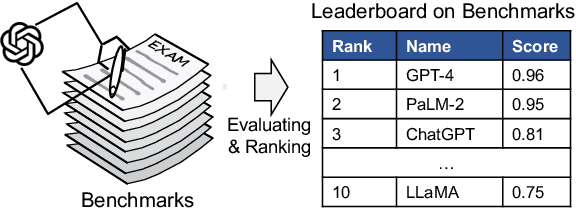
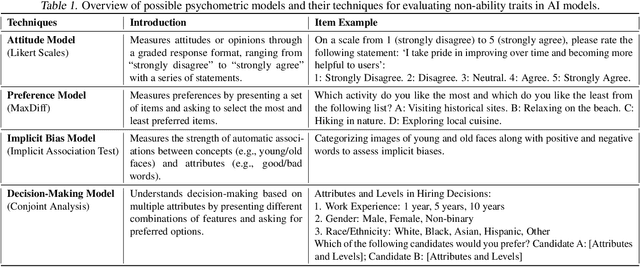
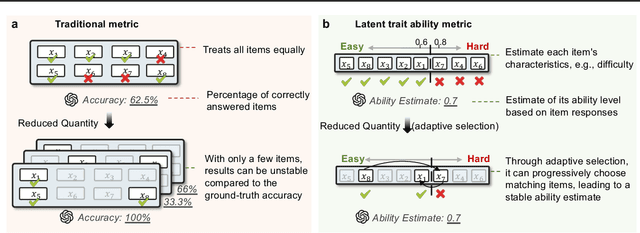
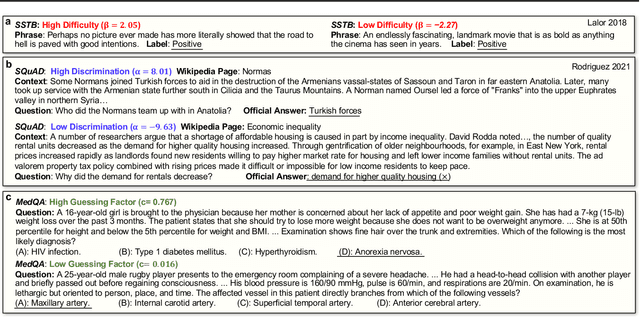
Large language models (LLMs), like ChatGPT, have shown some human-like cognitive abilities. For comparing these abilities of different models, several benchmarks (i.e. sets of standard test questions) from different fields (e.g., Literature, Biology and Psychology) are often adopted and the test results under traditional metrics such as accuracy, recall and F1, are reported. However, such way for evaluating LLMs can be inefficient and inaccurate from the cognitive science perspective. Inspired by Computerized Adaptive Testing (CAT) used in psychometrics, we propose an adaptive testing framework for LLM evaluation. Rather than using a standard test set and simply reporting accuracy, this approach dynamically adjusts the characteristics of the test questions, such as difficulty, based on the model's performance. This allows for a more accurate estimation of the model's abilities, using fewer questions. More importantly, it allows LLMs to be compared with humans easily, which is essential for NLP models that aim for human-level ability. Our diagnostic reports have found that ChatGPT often behaves like a ``careless student'', prone to slip and occasionally guessing the questions. We conduct a fine-grained diagnosis and rank the latest 6 instruction-tuned LLMs from three aspects of Subject Knowledge, Mathematical Reasoning, and Programming, where GPT4 can outperform other models significantly and reach the cognitive ability of middle-level students. Different tests for different models using efficient adaptive testing -- we believe this has the potential to become a new norm in evaluating large language models.